How long it takes to feel the effects of TRT
By Chad Barnsdale · Updated 2026-08-03

“How long until this actually works” is one of the most common questions after starting TRT, and the honest answer is that different symptoms improve on different timelines. Expecting everything to shift in the first two weeks is where a lot of unnecessary frustration comes from.
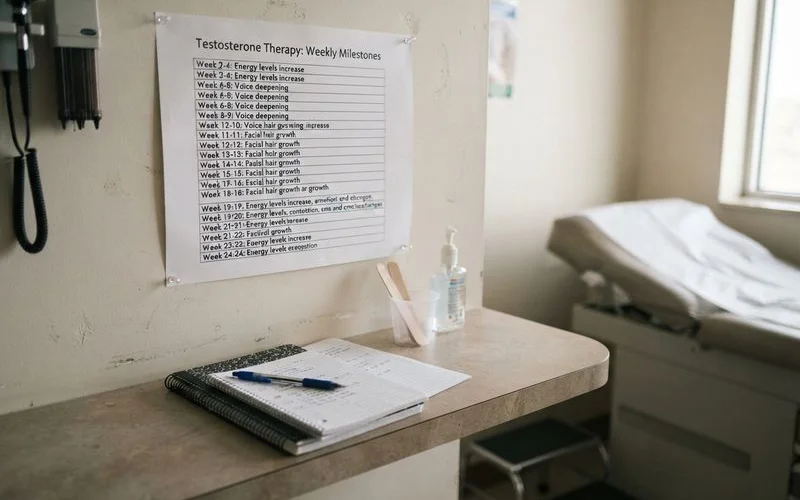
A realistic timeline by symptom
| Symptom | Typical timeframe to notice change |
|---|---|
| Mood and sense of well-being | 1–3 weeks |
| Libido | 2–4 weeks |
| Energy levels | 4–8 weeks |
| Sleep quality | 4–8 weeks |
| Muscle mass and strength | 3–6 months |
| Body fat reduction | 3–6 months |
| Bone density changes | 6–12 months or longer |
These ranges are general patterns, not guarantees. Your own timeline depends on your starting levels, dose, delivery method, and factors outside of treatment like sleep, diet, and exercise.
Why some changes are faster than others
Mood and libido shifts tend to show up first because they respond to relatively quick changes in hormone levels. Physical changes, muscle, strength, body composition, depend on slower biological processes: testosterone supports muscle protein synthesis and fat metabolism, but building or losing tissue takes months regardless of how quickly your blood levels normalize. Bone density is the slowest of all, typically measured in six-month or annual intervals rather than weeks.
How your delivery method shapes what you feel
Injections create a rise-and-fall pattern between doses, and some people notice feeling noticeably better in the days right after a shot and slightly less sharp as the next one approaches. Pellets and daily gels tend to produce steadier, more level concentrations over time, which some people find produces a more even, gradual improvement rather than a felt peak and dip. Neither pattern is better across the board, it is a personal preference worth discussing with your provider if timing-related mood swings bother you on injections.
When “no results” is worth raising with your provider
Feeling little to no change after two to three months, especially if your labs confirm your levels are in a good range, is a legitimate reason to have a direct conversation with your provider rather than assuming the treatment simply does not work for you. Sometimes this means a dose adjustment, sometimes it means checking whether another factor, like sleep apnea or thyroid function, is limiting how much benefit you can feel. It rarely means starting over from scratch.
Setting realistic expectations from day one
Going in with a rough sense of this timeline makes the first few months easier to sit through without second-guessing the treatment too early. Clear communication from the first visit is something our published methodology weighs when scoring Florida providers, alongside the clinical results themselves.
Common questions
- How soon will I notice a difference after starting TRT?
- Mood and libido changes are often the first things people notice, sometimes within a few weeks. Energy tends to follow over the following month or two. Physical changes like muscle gain and fat loss take considerably longer, generally several months.
- Is it normal to feel no different after a month?
- For some symptoms, yes. Energy and body composition changes are slower than mood and libido for most people. If you feel absolutely nothing has changed after two to three months, that is worth raising with your provider rather than assuming it never will.
- Does the delivery method affect how fast I feel results?
- It can. Injections cause levels to rise and fall between doses, which some people feel as a noticeable peak and dip. Pellets and daily gels tend to produce steadier levels over time, which some people describe as a more gradual, even effect.
- Why does it take months to see muscle or body fat changes?
- Testosterone influences muscle protein synthesis and fat metabolism, but those are gradual biological processes, not immediate switches. Combined with training and diet, meaningful physical changes typically take three to six months to become clearly visible.