Signs of low testosterone: what they mean and what to do next
By Chad Barnsdale · Updated 2026-07-20
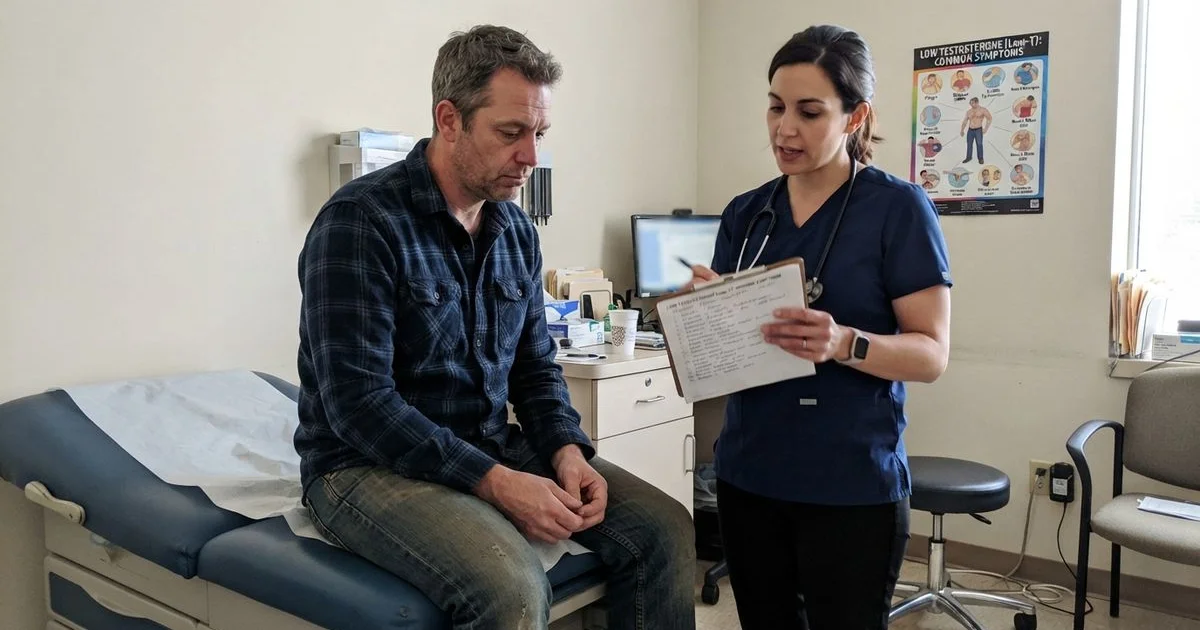
Low testosterone symptoms tend to creep in gradually, which is exactly why they are easy to write off as just getting older, being stressed, or not sleeping enough. Sometimes that is exactly what is going on. Sometimes it is not. Here is what the pattern typically looks like and why it is worth taking seriously rather than guessing.
The common categories of symptoms
| Category | Common signs |
|---|---|
| Physical | Fatigue, reduced muscle mass, increased body fat, fewer morning erections |
| Sexual | Lower libido, erectile changes |
| Emotional | Irritability, low mood, reduced motivation |
| Cognitive | Trouble concentrating, brain fog |
| Sleep | Poor sleep quality, sometimes worsened by an unrelated sleep disorder |
Most men do not experience every symptom on this list. It is usually a cluster of two or three, gradually, over months rather than appearing all at once.
Why these symptoms are hard to self-diagnose
The frustrating part of low testosterone is that almost every symptom on that list overlaps with something else: thyroid dysfunction, depression, chronic stress, poor sleep, or sleep apnea can each produce a nearly identical pattern. That overlap is exactly why guessing based on symptoms alone is unreliable in either direction. Some men attribute real hormonal decline to “just stress” for years; others assume low testosterone when the actual cause is something else entirely.
Normal aging versus something worth checking
A gradual, mild decline in energy or libido over many years can be a normal part of aging and does not automatically mean treatment is needed. What tends to be worth a closer look is a noticeable change over a shorter window, months rather than years, especially when it clusters with several symptoms at once rather than just one.
What actually answers the question
The only reliable way to know whether your symptoms are tied to testosterone is bloodwork, typically a morning draw checking total and free testosterone, sometimes alongside other markers depending on your full symptom picture. Florida’s men’s hormone health providers can walk you through what a baseline evaluation looks like and what your results would mean.
If your results come back low
A confirmed low reading, paired with your symptoms, is generally what defines a treatable diagnosis rather than just normal variation. From there, the conversation shifts to which treatment approach fits your life, which is a separate decision covered in our other guides on cost, delivery methods, and what to expect.
How clearly a clinic explains results, rather than how quickly it prescribes, is part of what our published methodology rewards when scoring Florida providers.
Common questions
- What is usually the first sign of low testosterone people notice?
- Persistent low energy or reduced motivation is one of the most commonly reported first signs, often followed by or paired with a drop in libido. Neither is specific to low testosterone on its own, which is why the full pattern matters more than any single symptom.
- Can low testosterone cause mood changes?
- Yes. Irritability, low mood, and reduced motivation are commonly reported alongside the more physical symptoms. Because these overlap heavily with stress, poor sleep, and depression, mood changes alone are rarely enough to point to testosterone specifically.
- At what age do these symptoms typically start?
- Testosterone naturally declines gradually starting around the mid-30s to 40s for most men, though the rate varies widely. Symptoms severe enough to prompt a visit tend to cluster in the 40s and 50s, but can appear earlier or later.
- How do I know if it's actually low testosterone or something else?
- You generally cannot tell from symptoms alone, since thyroid issues, sleep apnea, depression, and stress produce a similar pattern. A blood test is the only way to know your actual levels.