Is TRT legal without an in-person exam in Florida?
By Chad Barnsdale · Updated 2026-06-15
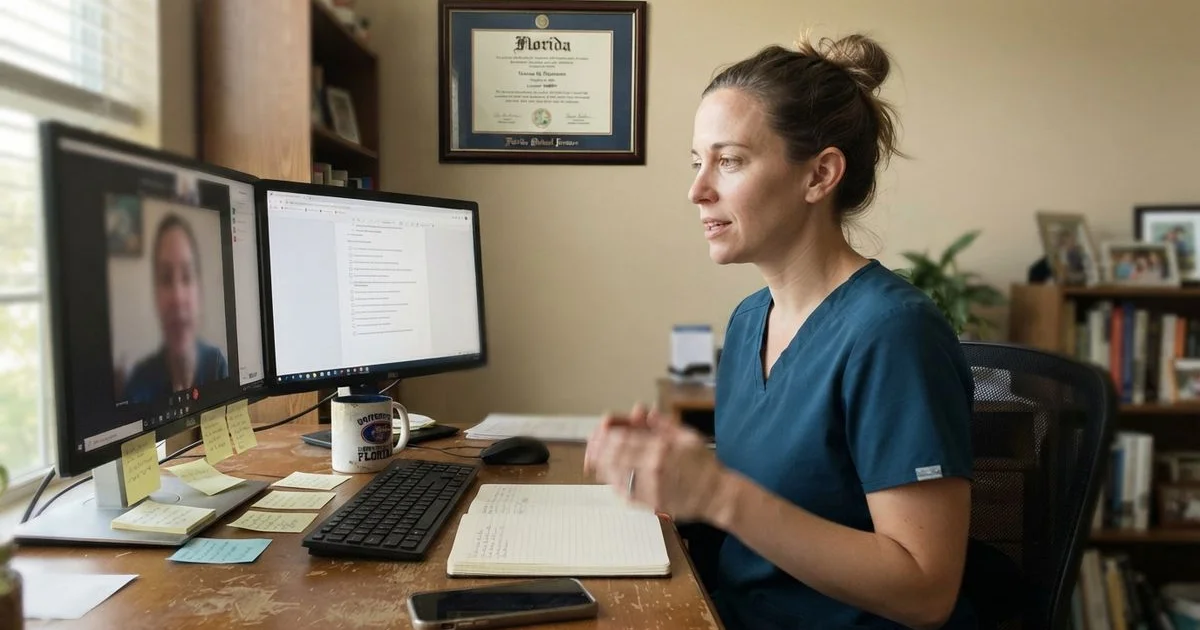
Telehealth has made getting started on TRT considerably easier, but it also raises a fair question: is a prescription written without ever meeting a doctor in person actually legal? The honest answer involves two layers of rules that do not always move at the same pace, and it is genuinely worth understanding both before you commit to an online-only program.
This is general legal information, not legal advice; telehealth prescribing rules change periodically, so confirm current requirements with your provider or a healthcare attorney.
Two layers of rules, not one
Federal rules govern testosterone specifically because it is a controlled substance. Historically, federal law required a prior in-person medical exam before a controlled substance could be prescribed by telemedicine. That strict requirement has been relaxed under various telehealth flexibilities in recent years, though the exact conditions attached to those flexibilities have been extended and adjusted more than once, so what was true a year or two ago is not guaranteed to still be current.
State rules govern how Florida-licensed providers are allowed to practice telehealth generally, including what counts as an adequate visit and what documentation a provider must keep. Florida has generally permitted telehealth prescribing of controlled substances when the provider meets the same standard of care expected in an in-person visit, but the specifics are the kind of detail that is worth verifying directly with your clinic rather than assuming from something you read online, including this guide.
What a legitimate telehealth TRT visit usually includes
| Step | What it typically looks like |
|---|---|
| Intake | A real medical history review, not just a symptom checklist |
| Visit | A live video or phone consultation with a licensed provider |
| Labs | Bloodwork ordered through an accredited lab, drawn locally |
| Diagnosis | A documented reason for treatment, not just a self-reported request |
| Prescriber | Licensed to prescribe in Florida, or under a recognized telehealth registration |

Red flags worth taking seriously
Be cautious of any program that writes a prescription from a short online questionnaire alone, with no live visit and no independent lab work. Also be wary of a company that will not name the Florida-licensed provider reviewing your case, or that ships medication before your labs come back. These shortcuts are not just a legal gray area, they also mean nobody with medical training is actually confirming you need the treatment.
How to check before you commit
Ask directly: who is the licensed provider, are they licensed in Florida, will there be a live visit, and where will my labs be drawn. A program with nothing to hide will answer all four without hesitation. Licensing transparency factors into our published methodology for ranking providers, which is a reasonable second check once a clinic has answered your questions to your satisfaction.
Common questions
- Can a doctor prescribe testosterone without ever seeing me in person?
- In many cases, yes, through a synchronous video visit that meets state and federal telehealth standards, though this depends on current federal rules around controlled substances that have shifted several times in recent years. Confirm the current requirement directly with your provider.
- Is testosterone considered a controlled substance?
- Yes, testosterone is a federally controlled substance, which is exactly why prescribing it over telehealth involves extra rules that do not apply to most other medications.
- What makes a telehealth TRT program legitimate?
- A real video or phone consultation with a licensed provider, lab work ordered through an accredited lab, a documented diagnosis, and a Florida-licensed prescriber. Skipping all of those in favor of a quick online form is a warning sign.
- Do the rules differ if I am prescribed testosterone by an out-of-state telehealth company?
- The prescriber generally needs to be licensed in Florida, or hold a telehealth registration recognized by the state, to legally prescribe to a patient located in Florida. This is one of the most commonly overlooked requirements with multi-state telehealth companies.